
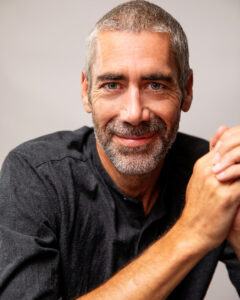
 Two years ago, I found myself at a crossroads. Life was OK – I thought I had a strong marriage, a steady career, a permanent home, a beautiful daughter. But beneath this illusion, something was wrong, something was missing. My wife saw it before I did: I was there, but not really there. Always planning, always moving forward, ticking boxes like a man afraid to stand still. Hiding in my head. Presence, real presence, didn’t come naturally.
That’s why I went to Hoffman. Not in meltdown, not at breaking point – but because I wanted more. More connection. More awareness. More of myself, untangled from the past.
I grew up in Essex, the middle child of three. My parents, shaped by the aftermath of war, believed in hard work and financial security above all else. My father, often away for long stretches, was emotionally distant even when he was home. My mother, sharp and driven, had dreamed of studying mathematics but instead poured herself into raising a family.
School in England in the 70s was tough. I was bright, but restless. If boredom set in, so did mischief – and that didn’t go unnoticed. Corporal punishment was normal, and I learned quickly to navigate authority, sometimes through quiet defiance, sometimes by taking blame I didn’t deserve. At home, my mother’s anger came in flashes; my father’s, in silence. And of the two, silence was worse.
Somewhere in all of that, I carved out my place. The quiet thoughtful one, the steady one, the achiever who kept his emotions neat and out of sight. I had a gift for art, but when the time came for university, I was coerced toward science – safer, more practical, less risky. And so, I followed the sensible path.
 For twenty years, I worked in the food industry. It was steady. Respectable. But it didn’t light anything up in me. My joy lived elsewhere – in the cricket team I built, in friendships, in late nights and long crazy weekends. Relationships came and went – nothing stuck. I sought escape over bonding and avoided confrontation, so rather than face hard truths, I let them unravel quietly. By the time I reached 39, I decided to stop dating altogether.
And then, life stepped up and magic happened. A last-minute invite to an old friend’s wedding on the island of Elba, a chance seat across from the most beautiful American woman, an evening of conversation, dancing and laughter that turned into something neither of us had planned. A whirlwind. Within months, she moved from New York to England. Six months later, we were married.
The early years were beautiful, but not always easy. My wife had left her family behind, a loss made sharper when our daughter was born. She felt I wasn’t fully present – not emotionally there. I escaped again. We tried couples counselling. She pushed me to reflect, to slow down, to look at myself honestly. But introspection wasn’t my language. Doing was. Keeping busy was.
She mentioned Hoffman before, but I dismissed it immediately. Hippy nonsense, I thought. Not for me.
But time passed. More conversations. More moments where I felt I was missing something – not just in my marriage, but in myself. I wasn’t broken. But I was avoiding myself. And I wanted to stop.
So I signed up. Nervous, skeptical, but ready.
At first, naming my parents’ patterns felt unsettling – like stepping onto fragile ground. Throw them under the bus – it seemed unfair, almost critical. But Bob Hoffman’s words steadied me: “Everyone is guilty, but no one is to blame.” That idea carried me through.
I arrived expecting a cultish circle of incense and chanting – my defences were up. My intellect chattering.
 Then, something softened. As the Process unfolded, understanding replaced judgment. We are not our patterns. They shape us, but they don’t define us – and once seen, they can be unlearned. What I found was structure, depth, and an empirical theory I could trust.
In that space, I saw my parents differently. Their quiet struggles, their unspoken love. The moments that once felt like emotional distance now seemed like attempts to connect. The intent was always there, even when the words and actions weren’t. And in recognising that, I found peace.
One of the first exercises asked us to write about our childhoods. I filled pages. Memories I hadn’t touched in decades poured out, and for the first time, I saw them clearly. The patterns, the unspoken rules I’d carried into adulthood – the fear of conflict, the need to keep the peace, the quiet pressure to succeed without making waves.
Then came a moment that cracked something open. I was asked to connect with my four-year-old self through the eyes of my father. And suddenly, there he was – small, anxious, trying so hard to be good so he wouldn’t upset anyone. I spoke to him. Told him he was safe. And without meaning to, I wept uncontrollably. I let go.
The cathartic exercises were unlike anything I’d ever done. Screaming and beating cushions. Stamping out frustration that had been buried for years. It sounded absurd. Like a fever dream, but it wasn’t. It was freeing. And the group dynamic added something unexpected. People who knew nothing about me somehow saw me. Their reflections softened things I hadn’t even realised were hard.
And then it was over and time to leave. A mixture of unexpected insight and euphoria persisted, but what had changed? Who was I now?
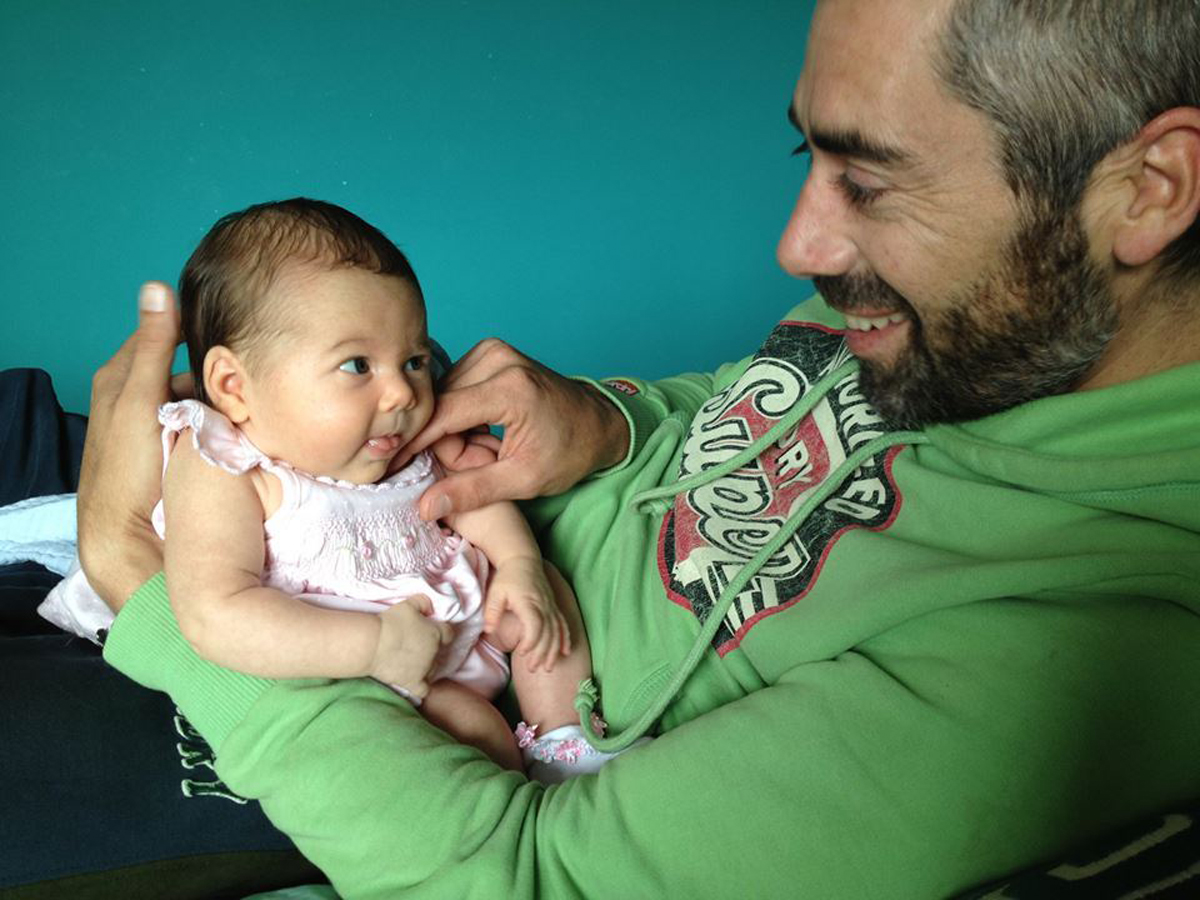
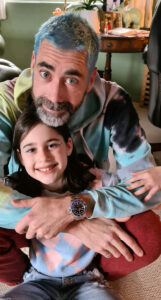 The real shift came in my parenting. Before Hoffman, my instinct was to fix. If my daughter cried, I’d rush to explain it away: “Be brave, it doesn’t hurt,” “it’s not that bad.” I was teaching her what I had learned – push the feelings aside, keep moving.
Then one day, she shut her hand in the car door. Ran to me in tears. My instinct kicked in. But instead, I paused. Looked her in the eyes. “That must have really hurt.” “How can I help?”
She melted into me. No logic, no fixing. Just presence.
A few weeks later, she told me, out of nowhere, “You seem different, Daddy. You listen to me.” I saw myself reflected in her eyes.
That moment broke me open in the best way.
I want my daughter to grow into whoever she chooses to be – not into a future shaped by me. She’s inherited my artistic eye, and we encourage it, but more than anything, time with her is no longer a task. The school run is a chance to chat, to joke, to send her mum silly texts. We climb trees. We laugh. And I find myself more open – to joy, to presence, to ‘now’.
My relationship with my parents has shifted, too. I carried quiet resentment for years, particularly toward my mum. Her anger had left its mark, and I had distanced myself to protect the younger version of me who still carried it. But at Hoffman, I saw her more clearly. Not just as my mother, but as a woman shaped by her own disappointments, her own sacrifices. She had wanted something else for herself. Life had chosen differently. I started to understand. And in understanding, I softened.
My sister and I – once friendly but emotionally distant – now speak with more warmth and understanding. We’re not suddenly best friends. But something has opened. And that feels like a beginning.
The Process didn’t end after seven days. I left with tools I still use.
I journal when I can – not pages, just enough to check in. “Where am I today?” Naming it helps. It stops me from reacting without understanding why. Helping me find that pause.
I make space for quiet. Even ten minutes barefoot in the grass steadies me in ways I wouldn’t have believed before. Moments in the sauna finding peace among the chatter.
Life still gets busy. I still feel impatience, stress, distraction. But the baseline has changed. I’m more centered now. More available. More present.
I didn’t go to Hoffman to fix something broken. I went because I wanted more than just ‘good enough’; to leave the path of least resistance. I wanted awareness. Connection. Heart.
And what I found was myself – buried under decades of escape and expectation, finally allowed to step forward.
I’m still learning. Still growing. But I’m awake. And for the first time, I feel like I’m really ‘here’.
Thank you to Mark for sharing his Process Story. You can read more accounts of the Process from people who have done it here.


 Sign up to receive monthly newsletters from Hoffman